
Finding a therapy that actually reaches your child is one of the hardest parts of parenting a child on the autism spectrum.
You may have already tried approaches that looked promising on paper but felt like a mismatch in practice. A therapist who kept asking your child to explain how they felt, when putting feelings into words, is exactly what your child finds most difficult. Sessions that ended in shutdown or distress because the format demanded more verbal processing than your child could give.
That mismatch is not your child failing therapy. It is therapy failing to meet your child where they are.
Art therapy for autism exists precisely to close that gap. It offers a non-verbal, sensory-engaged, creative pathway into the therapeutic process, one that does not require a child to narrate their inner experience before they have the language or safety to do so. For many children on the spectrum, it is the approach that finally works.
This post explains why that is, what the research shows, and what art therapy actually looks like for autistic children in practice.
Why Traditional Talk Therapy Can Be a Hard Fit for Autistic Children
Talk therapy is the dominant model in mental health care for good reason. It works well for a large portion of the population. But it is built on a set of assumptions about communication and processing that do not always hold for children on the autism spectrum.
The Verbal Processing Gap
Many autistic children experience significant challenges with verbal communication, not only in expressing themselves but in retrieving and organizing language under emotional pressure. When a therapist asks a child to describe what they are feeling, the request itself can trigger the kind of cognitive load that shuts communication down rather than opening it up.
The CDC identifies social communication challenges as one of the core features of autism spectrum disorder. For children whose brains process language differently, being asked to perform emotional articulation in a one-on-one adult conversation is often the hardest possible format for honest expression.
Sensory and Social Demands That Get in the Way
Traditional therapy settings also tend to involve sustained eye contact, close physical proximity, and an expectation of reciprocal conversation, all of which can be genuinely uncomfortable for autistic children. The sensory and social demands of the format can consume so much of a child’s regulatory capacity that little is left for the actual therapeutic work.
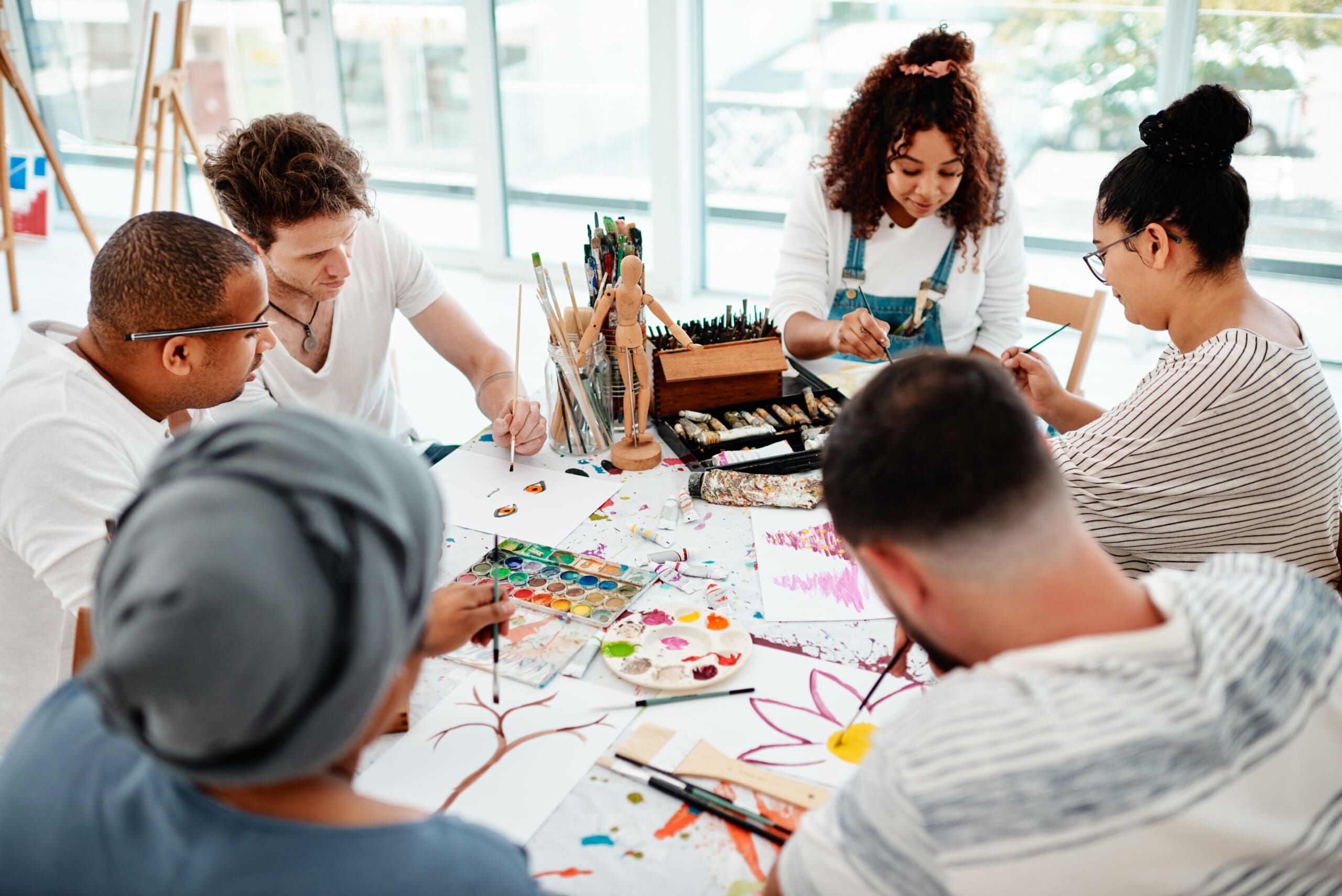
Art therapy changes the environmental equation. When a child’s hands are occupied with a creative task, direct eye contact becomes optional rather than expected. The focus shifts from the relationship itself to the shared activity, which paradoxically often makes the relationship easier to build.
What Is Art Therapy and How Is It Different From Just Doing Art?
This is one of the most common questions parents ask, and it is worth answering directly.
Art therapy is a clinical mental health practice in which a licensed or registered art therapist uses the creative process as the primary medium for therapeutic work. According to the American Art Therapy Association, art therapy integrates psychotherapeutic theory with the creative process to promote emotional well-being, self-expression, and psychological growth.
The distinction from recreational art is important. Art class gives children skills and a product. Art therapy uses the making of art as a way to access and process emotional and psychological material that may not be reachable through words alone. The art itself is not the goal. What emerges through the making of it is.
The Role of the Art Therapist
A registered art therapist (ATR) holds a graduate degree in art therapy and is trained in both clinical mental health practice and studio art. They do not interpret a child’s artwork for them or assign symbolic meaning from the outside. Instead, they invite the child to share what the work means to them, and they use those conversations and the observations they make during the creative process as the material for therapeutic work.
They are also trained to adapt activities to meet each child’s developmental level, sensory profile, and therapeutic goals. What a session looks like for one autistic child may look very different from another, and a skilled art therapist designs for that variability.
What a Session With an Autistic Child Actually Looks Like
A session typically begins with a brief settling-in period, which may involve a familiar sensory activity or simply time to acclimate to the space. The therapist then introduces a structured or semi-structured creative activity, chosen based on the child’s current therapeutic goals and sensory needs.
The child creates. The therapist observes, engages gently, and responds to what arises. At the end of the session, the therapist may invite the child to share something about what they made, though this is always an invitation, never a demand. Over time, these sessions build a relationship, a shared language, and a body of creative work that reflects and supports the child’s growth.
What the Research Says About Art Therapy for Autism
The evidence base for art therapy and autism is growing. Research published in the Journal of Autism and Developmental Disorders has found that art-based interventions can meaningfully improve social communication, emotional expression, and engagement in autistic children, particularly those who struggle with verbal communication.
A 2015 systematic review examining expressive arts therapies and autism found consistent patterns of improvement in areas including eye contact, turn-taking, emotional recognition, and overall engagement during sessions. These are not minor gains. For many autistic children, progress in these areas represents a significant shift in daily functioning.
Improvements in Communication and Emotional Expression
One of the most consistently reported benefits of art therapy for autism is improved emotional expression. Children who have limited verbal emotional vocabulary often find that creating an image, sculpture, or collage gives them a way to communicate something true about their inner experience that they could not have said out loud.
Over time, as the art becomes a shared language between child and therapist, many children begin to develop the verbal language to accompany what they have been expressing creatively. The creative expression comes first and creates the conditions for verbal expression to follow.
Sensory Integration and Self-Regulation Benefits
Art-making is inherently a sensory experience. Working with paint, clay, collage materials, or textiles engages the tactile, visual, and proprioceptive systems in ways that can be genuinely regulating for children with sensory processing differences.
Occupational therapists and art therapists increasingly work together to use art-making as a sensory regulation tool, not only for what it accomplishes emotionally but for the physical calming effect that focused, hands-on creative work can have on a dysregulated nervous system. For autistic children who experience anxiety, this regulatory dimension of art therapy is particularly significant.
Research on anxiety art therapy in autistic populations consistently shows reductions in anxiety symptoms, including self-reported distress and observable behavioral indicators, following structured art therapy intervention.
Art Therapy Activities That Work Well for Children on the Spectrum
Effective art therapy with autistic children is not random creative play. The activities are chosen deliberately, based on the child’s sensory profile, developmental stage, and therapeutic goals. That said, certain approaches tend to work particularly well across a range of presentations.
Structured vs. Open-Ended Activities
Autistic children often do better with activities that have a clear structure, defined materials, and a predictable sequence of steps, at least initially. Open-ended prompts like “draw whatever you feel” can be overwhelming for a child who is still building trust in the therapeutic relationship and the process.
Structured art therapy activities for children on the spectrum might include:
- Emotion maps: using color and shape to represent different feelings in the body
- Collage with pre-selected images: choosing images that represent things the child loves, fears, or wants
- Sequential drawing: illustrating the steps of a familiar routine or a recent experience
- Sculpture with clay or foam: tactile, low-pressure, and well-suited to children who find 2D work frustrating
- Mask-making: exploring the difference between how someone appears on the outside and how they feel on the inside
As the therapeutic relationship develops and the child becomes more comfortable, therapists typically introduce more open-ended activities that allow for greater spontaneous expression.
How Therapists Adapt Activities to Each Child’s Needs
A skilled art therapist does not apply a fixed curriculum. They observe what engages each child, what materials feel safe and regulating versus overwhelming, and what kinds of making seem to produce the most authentic expression. They adjust accordingly, session by session.
For children with significant sensory sensitivities, this might mean avoiding materials with strong smells or textures that feel dysregulating. For children who are highly rule-bound, it might mean providing very clear instructions before introducing any creative freedom. The adaptation is ongoing and informed by close attention to the individual child.
Art Therapy for Teens on the Autism Spectrum: Does It Still Work?
Yes, and often very effectively, though the approach looks somewhat different for adolescents than for younger children.
Teenagers on the autism spectrum are navigating a set of challenges that younger children are not: identity formation, peer relationships, romantic feelings, the growing awareness of being different in ways that matter socially. These themes are often too complex and too emotionally charged to approach directly in conversation, particularly with an adult in a clinical setting.
Art therapy for teens on the autism spectrum gives adolescents a way to process these experiences through the protective distance of the creative work. A teen who could not sit across from a therapist and talk about loneliness might spend an entire session building something that communicates it with precision.
Art therapy techniques that tend to work well for autistic adolescents include photography projects exploring identity, zine-making as a form of personal narrative, and digital art for teens who are more comfortable in technology-mediated environments. The medium matters less than the match between the activity and the teen’s natural way of engaging with the world.
How Art Therapy Fits Into a Broader Autism Support Plan
Art therapy is most powerful when it is part of a coordinated support plan rather than a standalone intervention. For children on the autism spectrum, that typically means working alongside other specialists, sharing information about what is emerging in sessions, and reinforcing therapeutic goals across settings.
Working Alongside Other Specialists
An art therapist working within a multi-disciplinary team will often coordinate with speech-language pathologists, occupational therapists, and mental health therapists to ensure that what is addressed in each setting supports rather than contradicts what is happening in the others. If a speech therapist is working on a child’s ability to initiate conversation, the art therapist may introduce activities that create natural opportunities for the child to practice that skill in a lower-stakes context.
Our post on why children on the autism spectrum often benefit from a multi-disciplinary therapy approach goes deeper into how these teams work and what parents should look for when building one.
What Parents Can Do at Home to Reinforce the Work
One of the practical advantages of art therapy is that its core principles are easy to carry into everyday life. Parents do not need to replicate clinical sessions at home, but creating low-pressure opportunities for creative expression, keeping art materials accessible, and responding with curiosity rather than evaluation when a child creates something can meaningfully extend the therapeutic work between sessions.
A child who spent a session in art therapy working on an emotion map might spontaneously return to that language at home, using color or drawing to communicate something they cannot yet say. Parents who recognize and gently respond to those moments are reinforcing the work in a way that accelerates progress.
How Flora and Associates Supports Children on the Autism Spectrum Through Art Therapy in New Jersey
At Flora and Associates, we offer art therapy as part of our services for children and adolescents in New Jersey, including those on the autism spectrum. We understand that reaching a child who struggles with verbal expression requires a different kind of creativity from the therapist, not just from the child.
Our approach to art therapy for autism is individualized, sensory-aware, and built around the specific child in front of us. We also work to stay connected with the other providers and specialists in your child’s life so that the work we do together fits into a coherent plan.
If you are exploring whether art therapy might be the right fit for your child, we would love to talk. Schedule a session with our team and let us know a little about your child. We will help you figure out whether this is the right next step.
Frequently Asked Questions
What is art therapy for autism, and how does it work?
Art therapy for autism is a clinical practice in which a trained art therapist uses creative activities as the primary medium for therapeutic work with autistic children. Rather than relying on verbal communication, it gives children a non-verbal way to express and process their experiences. The therapist uses what emerges in the creative process as material for building emotional skills, self-regulation, and communication.
Is art therapy for kids on the autism spectrum backed by research?
Yes. Studies published in journals including the Journal of Autism and Developmental Disorders have found that art-based interventions improve social communication, emotional expression, and engagement in autistic children. Systematic reviews of expressive arts therapies have documented improvements in eye contact, turn-taking, emotional recognition, and overall therapeutic engagement.
What art therapy techniques work best for autistic children?
Structured activities tend to work best initially, particularly for children who are new to the process or who thrive with predictability. Effective art therapy techniques for autistic children include emotion mapping, collage with pre-selected images, sequential drawing, clay or foam sculpture, and mask-making. As the therapeutic relationship develops, therapists gradually introduce more open-ended activities.
Can art therapy help with anxiety in autistic children?
Yes. Anxiety is one of the most common co-occurring conditions in autism spectrum disorder. Research on anxiety art therapy in autistic populations consistently shows reductions in anxiety symptoms following structured art therapy intervention. The sensory-regulating qualities of art-making, combined with the non-verbal, low-pressure format, make it particularly well-suited for children whose anxiety is heightened by verbal or social demands.
Should art therapy be the only therapy my autistic child receives?
For most children, art therapy works best as part of a broader, coordinated support plan rather than as a standalone intervention. Depending on your child’s profile, that plan might also include speech-language therapy, occupational therapy, and individual mental health therapy. An art therapist working within a multi-disciplinary team can share information and coordinate goals with other specialists, which tends to produce better outcomes than any single approach alone.